In this article
Part of Manipulation Tactics: Signs, Examples & Guides
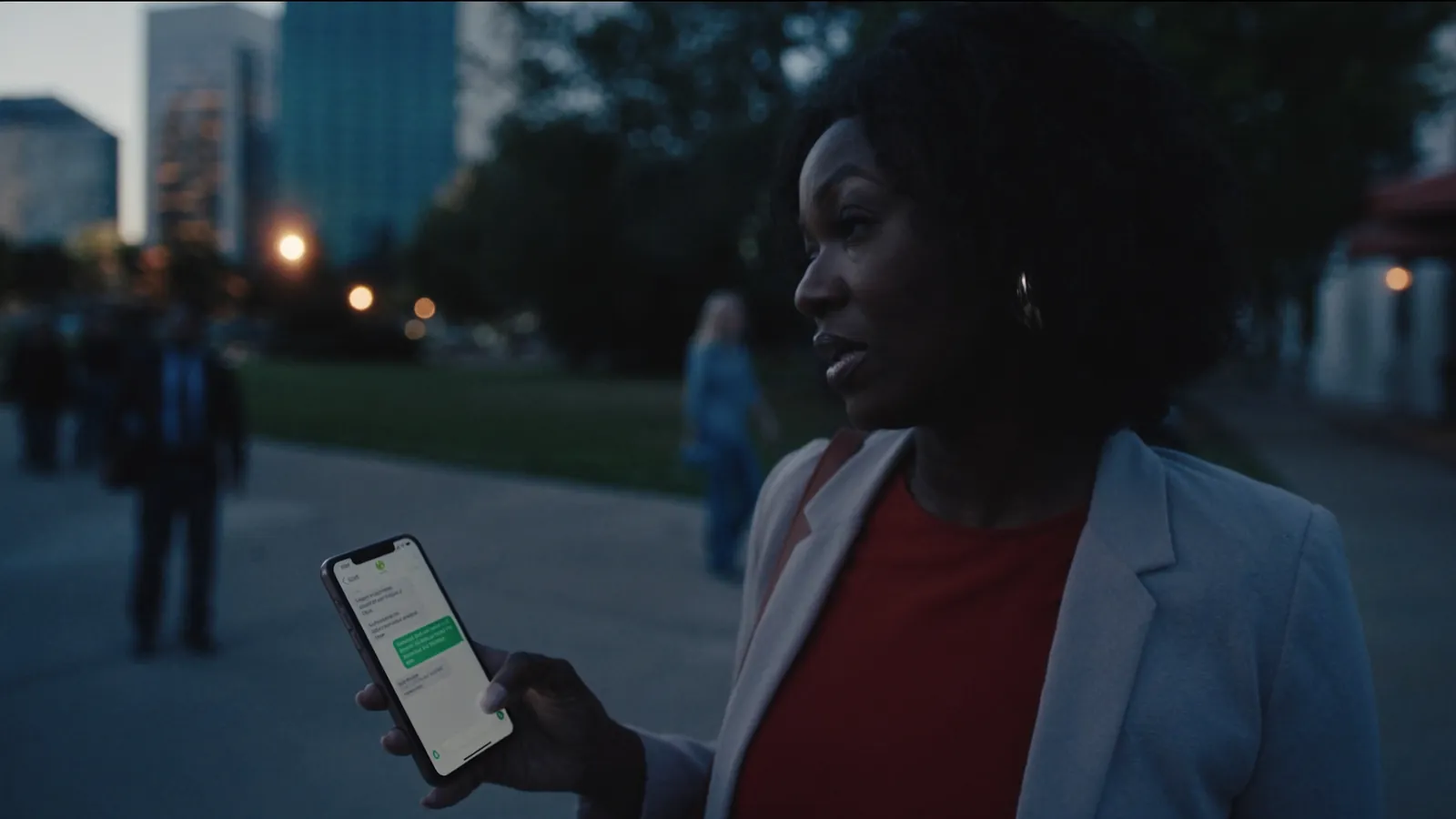
Weeks into no contact, your phone lights up. It might be a name you have not seen in a while, or a number you do not recognize. For a moment your body reacts before your mind does. This guide goes through 15 hoovering text examples, the kinds of messages people describe receiving after a break, what each may be trying to do, and how you can answer on your terms, or choose not to answer at all.
All the examples are illustrative. They are written to show common patterns and are not quotes from real people. A message after a breakup is not automatically hoovering: some people do reach out out of real regret, and some have a practical reason such as children or shared property. What separates the two is the pattern, the specifics, and how the contact responds when you set a limit.

What hoovering means
Hoovering is a term from popular writing about narcissistic abuse. The image is a vacuum cleaner pulling someone back into the relationship. It names a pattern in which a person who was distant, critical or absent reopens contact once you have stepped away. Our main guide to hoovering after no contact explains the pattern in depth, and the examples here focus on the actual wording.
Why can these messages be so effective? Research on traumatic bonding offers one explanation. Dutton and Painter interviewed 75 women who had recently left abusive relationships and found that intermittent maltreatment and power differences between partners were linked to stronger attachment to the former partner. A message that arrives after silence can feel like relief for that reason, and the relief is not a sign that you are weak. See how to break a trauma bond for more.
| What you notice | A message that may be hoovering | A message that may be genuine |
|---|---|---|
| What it names | "I've changed" with no detail | What happened, in their own words, without excuses |
| What it asks | An immediate answer or a call | A small, clear step you can decline |
| How it handles "no" | Escalates, guilt-trips or disappears | Accepts it |
| The pressure | Urgent, emotional, secret | Calm and patient |
| What changes after | Nothing concrete | Consistent behavior over months |
The National Domestic Violence Hotline says change is possible but is a long process, and it cites signs of progress such as admitting fully to what happened, stopping excuses and blaming, and accepting responsibility. A single message cannot show that.
The false remorse messages
"I'm so sorry for everything. I was a terrible partner. Can we please talk?"
What it may be doing: It apologizes for nothing in particular, so there is nothing to hold them accountable for. Compare it with an apology that names what they did.
"I've been in therapy and I'm a completely different person. I just want you to see that."
What it may be doing: It asks you to take the change on trust. Real change is usually demonstrated over time, and does not depend on your being convinced.
"I haven't slept in weeks. I can't eat. I don't know what to do without you."
What it may be doing: It places responsibility for their wellbeing back on you. Someone may genuinely be struggling, and even then support does not have to come from you. If you are worried about their safety, you can contact a mutual friend or a crisis service.
The invented emergency messages
"Your mom is in the hospital. I'm so sorry to tell you like this. Call me."
What it may be doing: Urgency is a lever. If it could be real, verify it directly with the family member, not through the person who sent it.
"I need to get my things back today or I'll lose my job. Please, just this once."
What it may be doing: A practical problem that can only be solved by you, in person, right now. Practical matters can usually be handled through a third party or in writing.
"The doctor found something. I'm scared. I don't want to be alone."
What it may be doing: It appeals to your care. Because it may be true, it is hard to ignore. You can respond with kindness and distance: "I'm sorry to hear that. I hope you have people around you."
A message that arrives after silence can feel like relief for that reason, and the relief is not a sign that you are weak.
The casual contact messages
"Happy birthday! Hope you're doing well."
What it may be doing: A low-stakes test of whether the door is open. One greeting is not an agenda, but a pattern of them after you set a boundary may be.
"Saw this and thought of you. Remember our trip?"
What it may be doing: Nostalgia without accountability. It recalls the good times and leaves out why you left.
"Oops, wrong number! But since I have you, how are you?"
What it may be doing: A plausible excuse to start a conversation. It may be innocent, which is why the best response is simply not to engage.

The provocation messages
"Heard you're seeing someone. Didn't take you long."
What it may be doing: It is designed to provoke a reaction, and any answer, even an angry one, restarts the conversation.
"You'll be back. You always are."
What it may be doing: It treats the end of the relationship as temporary and your decision as a phase.
"I wonder what your friends would think if they knew what you said about me."
What it may be doing: A veiled threat to your reputation. If a message includes threats, treat it as more serious than a plea; keep a copy and consider a confidential advocate. Women's Aid lists behaviors such as repeated put-downs and monitoring online communication as part of coercive control.
The third-party and last-chance messages
"A mutual friend said you were asking about me. Don't you think you owe me a conversation?"
What it may be doing: Contact through other people. Our guide to flying monkeys covers how third parties get involved.
"This is your last chance. After today I'm gone for good."
What it may be doing: An ultimatum that forces a decision under pressure. If the contact is leaving "for good," you do not need to stop them.
"Fine. I never loved you anyway. You ruined everything."
What it may be doing: When warmth does not work, anger is used to provoke a response. Both are ways of keeping the connection alive.
One greeting is not an agenda, but a pattern of them after you set a boundary may be.
How to answer, or not answer
You have more options than reply or ignore. Choose one before you read the message again.
Pause
Do not answer in the first hour. Urgency is part of how these messages work.
Decide your goal
Is there a practical reason to respond (children, property)? If not, silence is a complete answer.
If you reply, keep it short
One factual sentence, no explanation, no questions. See the grey rock method.
Protect your channels
Consider blocking, filtering or routing practical messages through one channel. The Hotline's technology safety guidance suggests extra precautions with email, phones and social media.
Tell someone
Say it to a friend, counselor or advocate so you are not alone with it.
If you want a plan shaped around your own situation, the Defense Playbook builds boundary scripts, with follow-up lines for when someone pushes back. It is an AI tool and gives general educational guidance rather than therapy. The text you describe is sent to our AI provider to build the playbook and is not stored on Narclyze's servers.
If the person has been violent, or if you fear how they will react to being ignored, speak to a domestic abuse service before changing how you respond. The Hotline offers a personalized safety plan, and the help lines below are free.
Frequently asked questions
Is every message after no contact hoovering?
No. Some people reach out out of genuine regret, or because of children, money or property. Look at the pattern: specifics versus vague claims, how they handle a limit, and whether contact is calm or urgent.
Should I block the number?
It is your decision. Blocking removes the trigger for many people. If you share children or property, you may need one practical channel; some people use a co-parenting app or email only.
What if the emergency could be real?
Verify through someone close to the situation, not the sender. You can respond with kindness without reopening the relationship.
Why do these messages affect me so much?
Intermittent contact after silence can feel like relief, and research on traumatic bonding links intermittent maltreatment to stronger attachment. It does not mean there is something wrong with you. A counselor can help you work through it.
Will they stop if I never respond?
Sometimes, and sometimes the messages escalate before they fade. If messages become threatening or frequent, keep a record and seek advice from a legal or domestic abuse service.
Sources
- National Domestic Violence Hotline. Is change possible in an abuser? thehotline.org/resources/is-change-possible-in-an-abuser
- National Domestic Violence Hotline. Plan for safety. thehotline.org/plan-for-safety
- National Domestic Violence Hotline. Internet safety for survivors. thehotline.org/plan-for-safety/internet-safety
- Women's Aid. Coercive control. womensaid.org.uk/information-support/what-is-domestic-abuse/coercive-control
- Dutton, D. G., & Painter, S. (1993). Emotional attachments in abusive relationships: A test of traumatic bonding theory. Violence and Victims, 8(2), 105–120. pubmed.ncbi.nlm.nih.gov/8193053
Share this article
Paste your conversation, first finding free
The analyzer points to the exact message, names the pattern and tells you how sure it is. It is a way to organize what you see, not a diagnosis.
Free checklist
14 Manipulation Tactics: A Checklist (PDF)
A 7-page printable checklist: what each pattern looks like, what you might notice and what can help. Enter your email and the download link appears here. You will also get the weekly Narclyze note, and you can unsubscribe at any time.
By subscribing you agree to receive the weekly Narclyze note. See our Privacy Policy.
Keep reading
 RecoveryHoovering After No Contact: Signs & How to Respond
 Manipulation tactics25 Narcissist Text Examples and What They Mean
 RecoveryGrey Rock Method: How It Works & When to Use It
More reading: How to Break a Trauma Bond: A Step-by-Step Plan